Start with the Gulfport facade, soil, and finish
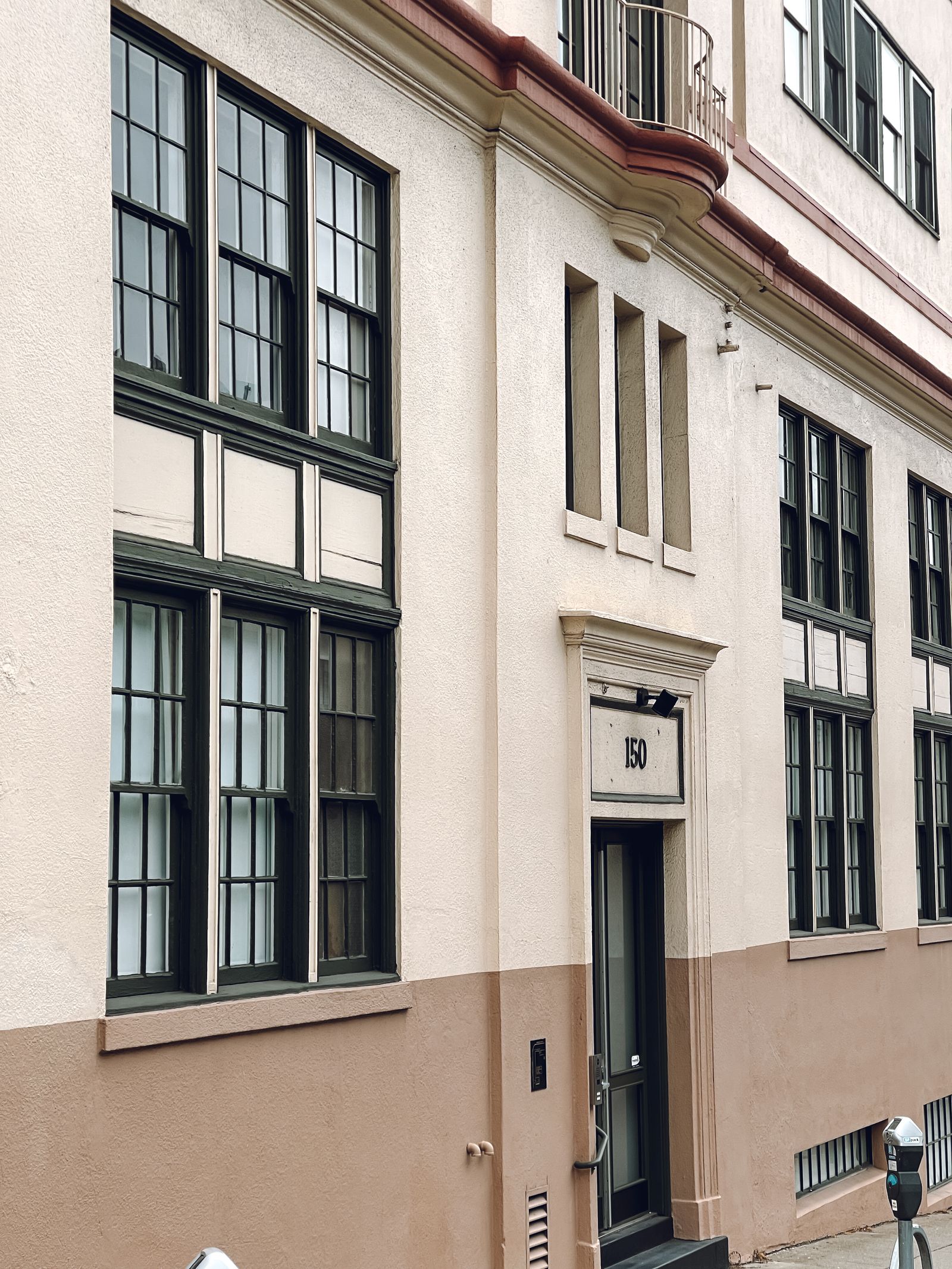
Gulfport buildings often combine painted masonry, brick, stucco, tilt-up or cast concrete, storefront glass, metal panels, awnings, sealants, tile, signage, and service-yard surfaces. A downtown property may have narrow sidewalks, older joints, restaurants, pedestrians, and delivery timing. A Highway 49 shopping center can add multiple tenants, shared parking, monument signs, landscaped islands, and drive-through circulation. A port-adjacent warehouse or service building may have broad walls, loading doors, forklifts, vehicles, dust, and equipment that cannot be treated as if the site were empty. A hotel or restaurant may prioritize the guest arrival, porte cochere, patio, pool-side routes, and visible service doors.
Soft washing can be appropriate for compatible algae-like growth, mildew-like film, pollen, bird residue, loose atmospheric soil, and some traffic film when the substrate and coating support the process. It is not a repair for cracked stucco, failed sealant, corroded metal, spalled concrete, peeling paint, leaking roof edges, blocked gutters, etched glass, or damaged signage. Pale bands may be salt or mineral deposits; dark streaks may be exhaust, oxidation, or a recurring water path. A useful quote identifies test areas, expected improvement, remaining deposits, included elevations, and conditions that belong with a mason, roofer, painter, glass specialist, or building-envelope professional.
- Map brick, mortar, stucco, concrete, glass, metal, tile, paint, sealants, and sensitive fixtures.
- Separate coastal salt, sand, algae-like growth, bird residue, traffic film, minerals, oxidation, and damage.
- Define whether the priority is a public-facing reset, tenant turnover, event, inspection, or recurring care.
- Use a representative test area when the coating history or cause of staining is uncertain.
Build the scope around downtown, Highway 49, and the Gulfport-Biloxi corridor
Downtown Gulfport work can sit beside offices, restaurants, civic activity, waterfront visitors, public sidewalks, events, and deliveries. Work near the port and industrial waterfront can involve controlled gates, trucks, loading areas, rail or heavy-vehicle movement, storage, and security procedures. The port context helps explain why dust, salt, and equipment traffic may affect a property, but it does not establish a contract, site relationship, or special access. The proposal should use only the access and coordination the owner actually authorizes.
Highway 49 retail properties often stay active from early customer arrivals through evening business. Storefront glass, signs, sidewalks, curb lines, parking aisles, food-service areas, and tenant doors may need separate sequences. A hotel, restaurant, or attraction serving visitors between Gulfport and Biloxi may need the most visible elevation handled before arrivals, with patio furniture, guest routes, pool equipment, and loading activity protected. The work plan should name barriers, hose crossings, spotters, entrance handback, delivery windows, and the person authorized to pause work when the operating day changes.
Medical, office, and education properties add accessible routes, patient or student movement, HVAC intakes, quiet periods, employee entries, and emergency access. Before scheduling, confirm water access, keys, tenant notice, irrigation, roof drains, low points, neighboring walls, and the time required to return each route dry and clear. A phased plan can keep the primary entrance open while a side or rear elevation is treated, then rotate through visible areas without pretending that an occupied building is an empty wall.
Plan for salt air, humidity, storms, wind, sand, and algae
Gulfport's coastal setting can expose exterior surfaces to humid air, salt-bearing moisture, windblown sand, rain, shade, and repeated wetting. Salt film may dull glass or metal and can contribute to deposits or corrosion concerns; it is not the same condition as algae-like growth. Sand can settle on ledges, lower walls, door tracks, canopies, and parking-side surfaces, where a rinse sequence and protection plan matter. High humidity and shaded landscaping can leave walls damp longer, while organic-looking growth may recur where moisture remains available. These are reasons to inspect and document the source, not reasons to promise a universal cleaning frequency or result.
Storms and tropical weather can change a Gulfport schedule quickly. Wind affects overspray, hoses, barriers, vegetation, public separation, and any aerial work. Heavy rain can dilute an application, move rinse water toward inlets or neighboring property, reduce traction at entries, and expose drainage paths that were not obvious during a dry review. Heat and humidity affect dwell, drying, worker exposure, and when a finished elevation can be inspected. The plan should state weather hold points and rescheduling triggers before equipment arrives.
A returning streak may point to a gutter, scupper, downspout, roof edge, irrigation head, condensation point, failed joint, planter, or low facade that remains wet. Cleaning can document a visible condition, but it cannot guarantee that the cause is corrected. Owners should know whether the quote covers appearance cleaning only or also involves a separate investigation by another trade. That distinction is valuable after a storm, when a clean surface can still be exposed to new salt, windblown sand, rain, or a building-envelope defect.
- Review wind, rain, lightning, heat, humidity, surface temperature, drying, and storm timing before each phase.
- Check roof edges, gutters, downspouts, drains, irrigation, planters, and low walls for repeat wetting.
- Protect plants, air intakes, glazing, metals, coatings, signs, equipment, and occupied paths.
- Pause when weather or observed water movement makes the planned work zone uncontrolled.
Choose access for the actual elevation and occupied site
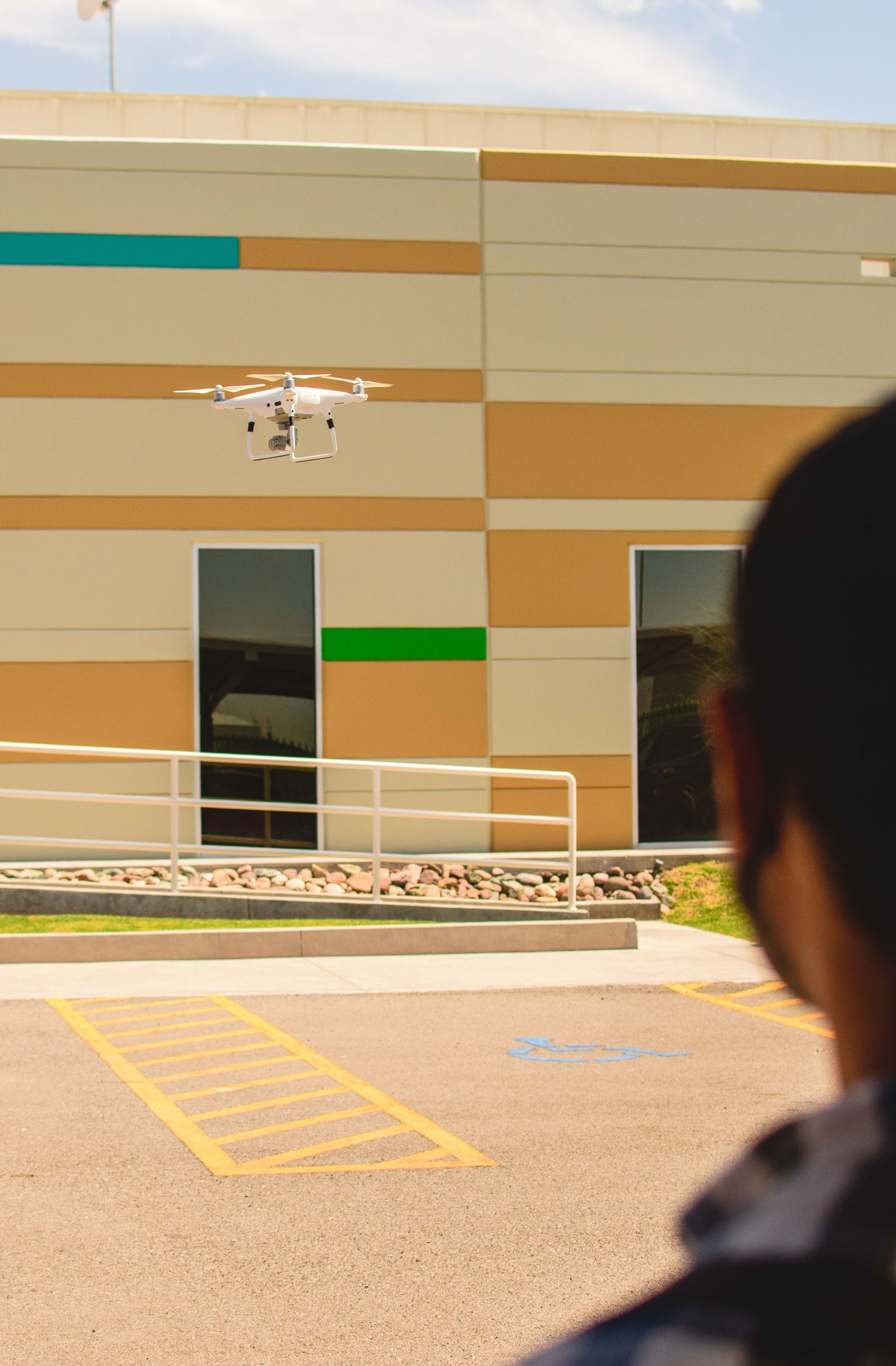
Drone assistance may be considered for a suitable broad upper elevation when facade compatibility, wind, stand-off distance, visual control, launch and recovery space, public separation, water access, and runoff all support it. Aerial support can reduce repositioning on selected parapets, upper walls, signs, or tall compatible panels. It does not replace close condition assessment, hand detailing, contact glass cleaning, bonded mineral removal, joint repair, coating correction, or leak diagnosis. The quote should identify aerial zones and the ground, pole, lift, roof, or hand method used for the rest.
Gulfport sites can include power lines, palms and mature trees, rooftop equipment, antennas, cameras, fences, active roadways, parking lots, port or industrial equipment, hotel balconies, and neighboring occupied parcels. Commercial drone operations remain subject to applicable Federal Aviation Administration rules; property permission does not replace aviation requirements or any needed authorizations. Wind, public activity, airspace, launch space, recovery space, and visual control are actual site questions. When those controls are not adequate, a grounded method is the responsible choice.
A hybrid plan may use low-pressure treatment on a compatible upper wall, a water-fed pole for selected glass, controlled pressure on an evaluated concrete apron, and hand work around doors, signs, louvers, canopies, and salt-sensitive details. Height alone does not decide the method. The required finish, material, soil, operating schedule, weather, public movement, and drainage should decide it.
Treat drainage, runoff, and site protection as part of the quote
Water planning depends on the product, soil, rinse volume, slope, drain type, landscaping, low points, and property requirements. A curb inlet, trench drain, or parking-lot grate is not automatic permission for treated water to enter it. Depending on the work, controls may include diversion, collection, recovery, reduced rinse volume, filtration, plant protection, disposal, or coordination with the responsible authority. The proposal should state its assumptions and what happens if the first rinse moves differently than the site review suggested.
Trace doors, accessible routes, storm drains, swales, parking-deck ramps, landscaped beds, pool equipment, HVAC intakes, electrical equipment, vehicles, neighboring tenants, and guest paths before applying solution or rinse water. Gulfport rain can make a shallow-looking slope carry water farther than expected. The operator should watch the first controlled rinse, verify barriers and hose lines, and stop when flow leaves the planned area. This is especially important at hospitality entrances, shared retail parking, industrial yards, medical drop-offs, and port-area service routes.
Protection also covers plants, outdoor seating, merchandise, vehicles, signs, cameras, doors, equipment, and people. Closeout should record completed elevations, remaining deposits, visible damage, controls removed, and routes returned to service. A documented result helps the property team decide whether the next need is a targeted reset, a recurring visit, a drainage repair, or another specialty trade rather than assuming every Gulfport property needs the same treatment.
Request a Gulfport quote with useful property information
Send the address, building use, approximate height, facade materials, target elevations, desired timing, operating hours, water access, nearby drains, access restrictions, and known leaks, loose material, coating failure, salt deposits, algae-like growth, or previous cleaning damage. Photos of the main entrance, shaded wall, upper elevation, roof edge, loading area, glass, landscaping, and parking-side drainage help distinguish a cleaning request from a repair concern. Mention whether the goal is a guest-ready entrance, tenant turnover, event, recurring care, ownership visit, or one specific stain.
To discuss a Gulfport property, call +1 239-351-2897 or email contact@dronebuildingcleaners.com. Drone Building Cleaners can help you get in touch, review whether soft washing, controlled pressure, aerial support, or a hybrid method fits the building, and prepare a quote around the result you need. The scope should be specific about elevations, access, protection, weather, drainage, limitations, and work that should be handled by another trade.